Moms Should Know Self-Care Really Isn't Selfish

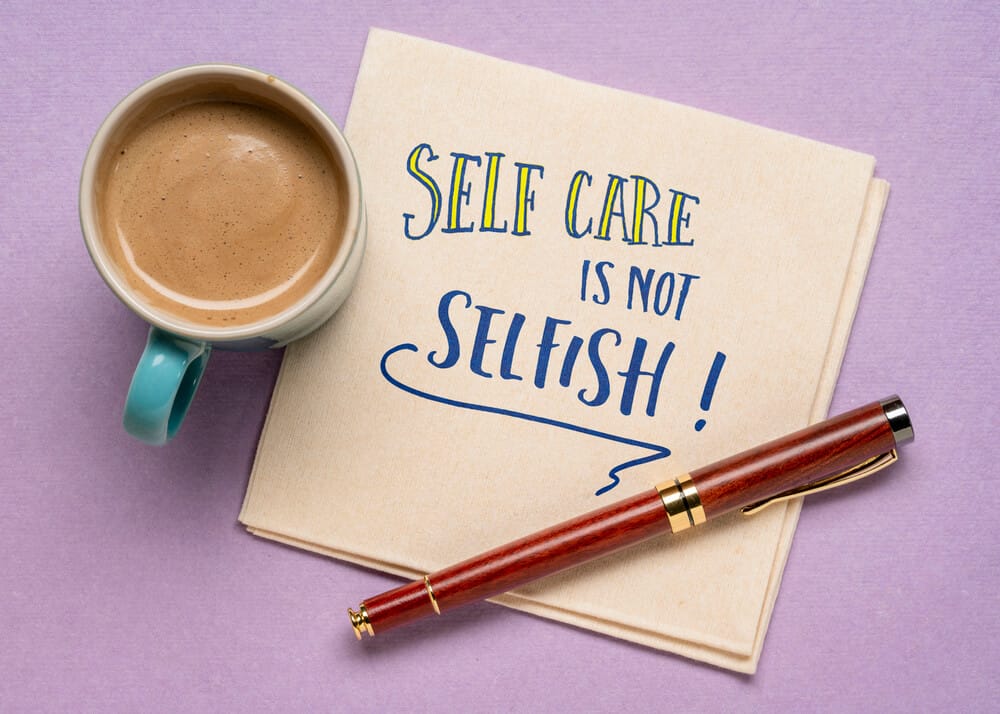
You’ve heard the cliche “self-care isn’t selfish” before and have probably raised a skeptical eyebrow. After all, society teaches moms that self-care is selfish. That “good moms” put their kids’ needs above their own. That “good moms” make sacrifices. That “good moms” don’t need a break from their own children.
The “self-care isn’t selfish” cliche isn’t wrong. But an empty slogan isn't going to override the constant messaging that “good moms” put everyone else first. That’s why this post exists and why it’s grounded in evidence from scientific studies: to push back on societal messaging and banish mom-guilt around self-care.
Before getting to the science, though, let’s pause to clarify what self-care really is. Because if you think of “self-care,” you might picture a spa day or a luxurious bubble bath with expensive candles, which are out-of-reach for many moms. While those things can count as self-care, they are far from the only options. That's because self-care is any intentional act that supports your well-being. This means self-care doesn’t have to take hours. For example, dancing to a song you love, going for a walk, or even savoring some chocolate all count.
Now let’s look at the scientifically backed reasons that self-care isn’t selfish.
Self-Care Supports Your Mental and Physical Health
We’ve defined self-care as intentional acts that support your well-being, but is self-care actually good for your health? Science suggests the answer is “yes.” Researchers found that people who regularly spent time on enjoyable leisure activities, such as going outside, pursuing their hobbies, or just winding down in the evenings, tended to have better mental and physical health.
On the mental health side, researchers found regularly making time for enjoyable leisure activities was associated with higher levels of life satisfaction and lower levels of depression. On the physical side, they found regularly making time for such activities was associated with lower blood pressure and lower levels of the stress hormone cortisol.
So is doing something to support your mental and physical health selfish? No, it really is a necessity, especially when you have people in your life who depend on you.
Self-Care And Your Kids
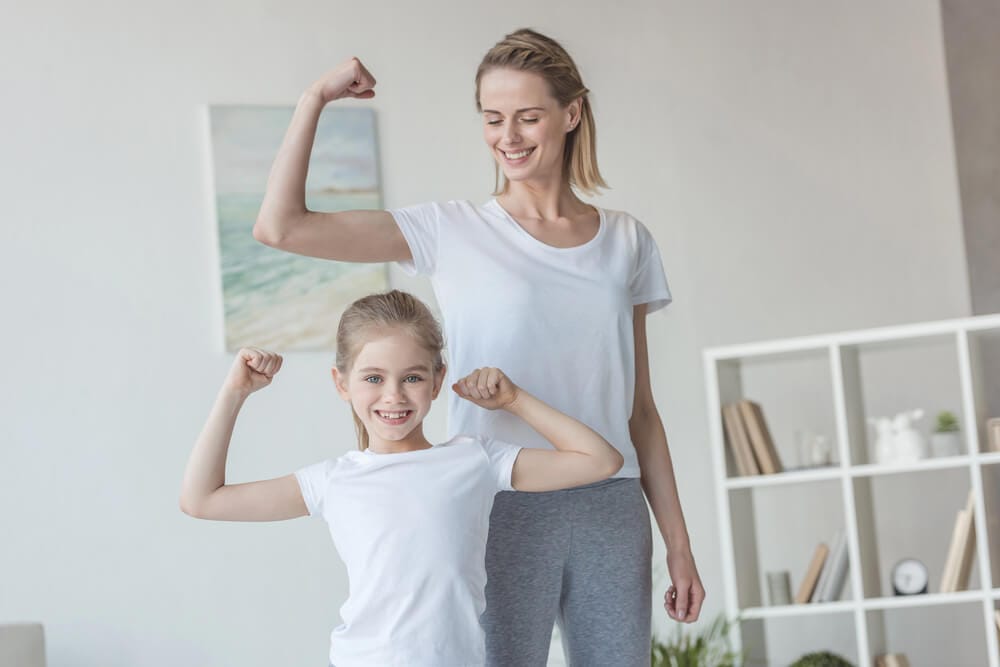
The fact that self-care supports your mental and physical health is a real reason you shouldn’t feel guilty about self-care. But sometimes mom-guilt can strike whenever you’re doing something that isn’t explicitly for the kids, so that fact alone might not be enough to banish the guilt about taking some time for yourself. So let’s look at how practicing self-care can actually be good for your kids, too.
First, according to one psychological theory, parental well-being forms a foundation for child well-being. Researchers building on this theory also found that moms who are more satisfied with their lives tend to engage in more activities with their kids, like taking them to a playground or playing board games with them. They also found that a higher frequency of shared activities between a mom and her child was associated with higher child well-being. So next time mom-guilt tries to creep in around self-care, remember that your kid's well-being is connected to your own and that caring for yourself is a part of caring for them.
A second piece of evidence comes from social learning theory. According to this theory, kids watch how their parents behave and then often copy similar behaviors themselves. And in one study, researchers found links between how parents cope with everyday stress and how their kids cope. As self-care is a healthy way of coping with stress, this serves as a good reminder that when you take time to care for yourself, you're showing your kids how to look after themselves as well.
Closing Thoughts
As a mom, it’s hard to take time to practice self-care without feeling guilty. But that guilt comes from harmful societal messaging, and is not based in reality. In fact, scientific evidence suggests that practicing self-care is not only good for you, it’s good for your kids, too! I’d love to hear how you handle mom-guilt around self-care in the comments!
References
Clinic, Cleveland. “Social Learning Theory: What It Is & How It Works.” Cleveland Clinic, 4 Mar. 2026, https://my.clevelandclinic.org/health/articles/social-learning-theory.
Kliewer, Wendy, et al. “Coping Socialization in Middle Childhood: Tests of Maternal and Paternal Influences.” Child Development, vol. 67, no. 5, Oct. 1996, pp. 2339–2357, https://doi.org/10.1111/j.1467-8624.1996.tb01861.x.
Morris, Rebecca. “Self-Care for Moms Who Don’t Have Time for Self-Care.” Everyday Resets Club, 3 Apr. 2026, https://www.everydayresetsclub.com/self-care-for-moms-who-dont-have-time-for-self-care/.
Newland, Lisa A. “Family Well-Being, Parenting, and Child Well-Being: Pathways to Healthy Adjustment.” Clinical Psychologist, vol. 19, no. 1, 9 Feb. 2015, pp. 3–14, https://doi.org/10.1111/cp.12059.
Pressman, Sarah D., et al. “Association of Enjoyable Leisure Activities with Psychological and Physical Well-Being.” Psychosomatic Medicine, vol. 71, no. 7, 10 July 2009, pp. 725–732, https://pmc.ncbi.nlm.nih.gov/articles/PMC2863117/.
Richter, Nina, et al. “Relations among Maternal Life Satisfaction, Shared Activities, and Child Well-Being.” Frontiers in Psychology, vol. 9, 23 May 2018, https://doi.org/10.3389/fpsyg.2018.00739.
Subscribe to receive your free Mini Menus & Mini Mood Booster!
Member discussion