Mom Rage and What to Do When You’re About to Snap


The resets in this post are simple self-care tools. They are not a substitute for medical or mental health advice. Please reach out to a professional if you need more support.
It's way past your kid's bedtime, but they're still not asleep. And they keep coming downstairs. You're desperately trying to finish the washing up, pack their school lunch for the next day, and clean up the kitchen for the night. But you keep having to stop what you're doing to get them back to bed. You're exhausted and just want to go to sleep. But you can't until you've finished the chores and your kid stays in bed.
The first few times your kid comes down, you're patient with them. But the fourth time? That's when the anger that's been quietly simmering under the surface suddenly explodes. The sounds that come out of your mouth are almost feral. Your kid bursts into tears. And then you're drowning in guilt and shame.
That sudden, uncontrollable anger that explodes out of nowhere? It has a name: mom rage. And it’s a very common experience for moms. So let’s talk about what it is, how you can deal with it in the moment, and how you can try to prevent it.
What is Mom Rage?
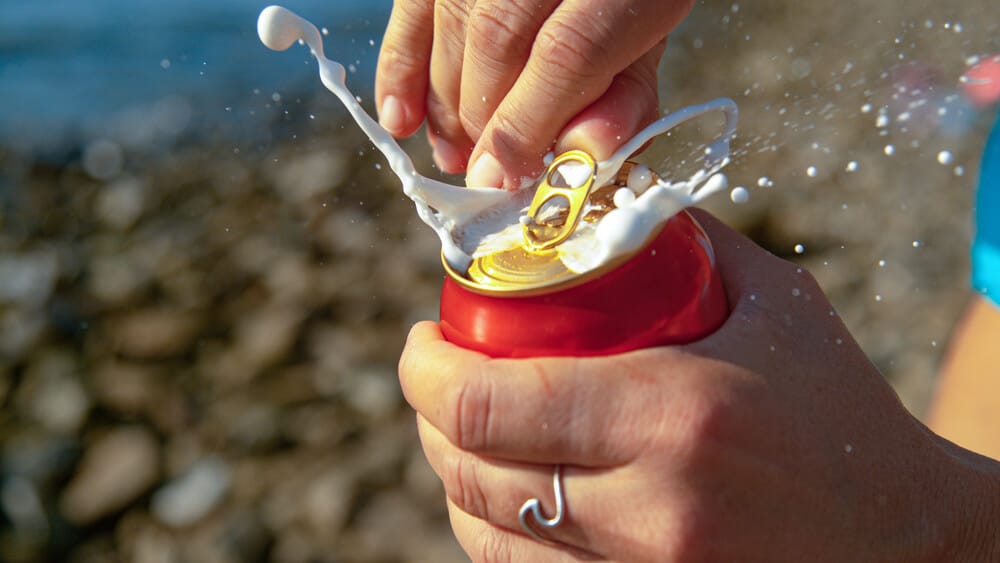
Imagine a soda can that’s been shaken all day. It looks completely fine. But if you open it, sticky liquid is going to erupt everywhere. As moms, we're like the soda can. We’re continually given little “shakes” throughout the day by stress, exhaustion, overstimulation, the mental load we carry, and even the unrealistic expectations society places on us. Eventually something triggers us, like our kid who won’t stay in bed, and all our pent up frustrations explode outward as mom rage, just like the soda escaping from a shaken can.
The important point about this analogy is that mom rage doesn’t just come from what triggers us in the moment. As Minna Dubin explains in her book on the subject, “Mom rage stems from the overwhelming stress and impossible expectations of modern motherhood, combined with a debilitating lack of support from within the family structure and societal systems.”
So experiencing mom rage does not mean you’re just over-reacting to something your kid did. It means you’ve been pushed past your limit by unmet needs, stress, and a lack of support. Under those circumstances, it’s not surprising moms explode!
So what does a mom rage explosion feel like? Researchers have found it is often a physical experience, with symptoms such as increased heart rate, muscle tension or clenched jaws. Sometimes, it can be felt even more viscerally. For example, some moms described their rage as “a fire” in their belly or as a “white searing” behind their eyes.
However, different moms will express their rage in different ways. Some will react physically, for example by stomping their feet or slamming doors. Others will have emotional reactions, such as screaming or crying.
And while researchers found that mom rage explosions sometimes bring temporary relief, they also found most moms experienced strong feelings of guilt and shame after they erupted.
Responding to Mom Rage

So what can you do if you start to feel anger simmering below the surface and want to avoid a mom rage explosion? That’s where a quick reset might be able to help. Below you’ll find three resets to try when you feel yourself getting angry: one that takes just one minute, one for when you can grab five minutes, and one for when you can take 15 minutes.
1-Minute Reset for Mom Rage
Name the emotion by saying “I’m feeling angry." Then take a few deep breaths. Finally, push against the wall as hard as you can three times.
Research has shown that naming what we feel can reduce the intensity of that emotion. And deep breaths and pushing on a wall are two ways to complete the stress-response cycle, which tells our bodies that it’s safe to calm down.
5-Minute Reset for Mom Rage
First do the 1 minute reset. Then put on a song and dance hard to get the angry energy out.
This is a longer version of the 1-minute reset, with extra physical activity in the form of dancing to help complete the stress-response cycle and get your body out of fight-or-flight mode.
15-Minute Reset for Mom Rage
Put on a ten minute no-equipment workout from YouTube to give your rage an outlet. When you’re finished, sit down with a glass of water. Ask yourself what you need. Your anger is trying to tell you something.
This reset, like the others, includes physical activity as a way to complete the stress-response cycle and give your body the “all-clear” signal. It also reminds us that mom rage is not just about what triggers us in the moment, but often about our unmet needs, and asks us to consider what those might be.
Preventing Mom Rage

Remember the soda can analogy? As moms, we’re “shaken” throughout the day by things like stress, exhaustion, the mental load, and unrealistic expectations. And this shaking is what sets us up to explode the next time our kid comes downstairs for the fourth time instead of going to sleep.
This analogy gives us a way to try to prevent mom rage: find out what is “shaking” us and stop or reduce it. For example, if you realize that you tend to explode when you’re feeling overwhelmed, maybe you can ask someone to help, or see if it’s possible to postpone or even completely drop some of the tasks that are making you feel overloaded. Or if you discover that the stress of getting the kids out of the house on time is a trigger, then making adjustments to the morning routine could be helpful.
But sometimes the “shakes” that give rise to mom rage don’t have an easy solution. Structural and societal issues, like the lack of support available for moms plus the unrealistic expectations placed on us, won’t change overnight. And sometimes our attempts to limit our triggers won’t be successful. For example, if you try getting up earlier to give yourself more time to get the kids out the house, you might find yourself exploding later in the day due to exhaustion.
In these cases, the resets from the previous section can serve a similar purpose to tapping the sides of the soda can to help prevent an explosion. A few minutes of quick but effective self-care practices a day can also help tap the side of our shaken soda cans.
And if you ever feel like you need more support, please consider reaching out to a therapist. There are many who are familiar with mom rage and can help you develop strategies to manage it.
Closing Thoughts
Mom rage is common, and it doesn’t mean you’re a bad mom. It means that you’ve been pushed past your limit by stress, exhaustion, a lack of support, and unrealistic expectations. Next time you feel anger simmering beneath the surface, you can try one of the resets and see if it helps. I’d love to hear about what helps you manage mom rage in the comments!
References
China Billotte Verhoff, et al. ““A Fire in My Belly:” Conceptualizing U.S. Women’s Experiences of “Mom Rage.”” Sex Roles, vol. 88, no. 11-12, 5 May 2023, pp. 495–513, https://pmc.ncbi.nlm.nih.gov/articles/PMC10159823/.
Dubin, Minna. Mom Rage. Seal Press, 19 Sept. 2023, https://bookshop.org/p/books/mom-rage-the-everyday-crisis-of-modern-motherhood-minna-dubin/d88032419edbe8aa.
Morris, Rebecca. “Overstimulated Mom? Reset in 1, 5, or 15 Minutes.” Everyday Resets Club, 19 Apr. 2026, https://www.everydayresetsclub.com/overstimulated-mom-reset-in-1-5-or-15-minutes.
Morris, Rebecca. “Overwhelmed Mom? It's Not You. It's the Mental Load.” Everyday Resets Club, 21 July 2026, https://www.everydayresetsclub.com/overwhelmed-mom-its-not-you-its-the-mental-load/.
Nagoski, Emily, and Amelia Nagoski. Burnout : The Secret to Unlocking the Stress Cycle. New York, Ballantine Books, 2020, https://bookshop.org/p/books/burnout-the-secret-to-unlocking-the-stress-cycle-amelia-nagoski-dma/3d6275d2844732a6.
Torre, Jared B., and Matthew D. Lieberman. “Putting Feelings into Words: Affect Labeling as Implicit Emotion Regulation.” Emotion Review, vol. 10, no. 2, 20 Mar. 2018, pp. 116–124, https://doi.org/10.1177/1754073917742706.
Subscribe to receive your free Mini Menus & Mini Mood Booster!


Member discussion